A landscape can make the decision feel obvious. A quiet road through the Alentejo, an old stone house surrounded by olive trees, or a piece of coastline opening towards the Atlantic can quickly turn interest into attachment. Yet land rarely reveals its full story during a viewing.
Every property has two identities. The first is the one we experience: its setting, character and sense of possibility. The second exists across maps, registrations, planning rules, access rights and infrastructure. One captures the imagination; the other determines what can actually be owned, developed and protected.
This distinction matters especially to an investor approaching Portugal from abroad. Distance can make an attractive opportunity appear simpler than it is. A generous plot may contain boundaries that have never been properly reconciled. A building may exist physically without carrying the permissions expected by its buyer. Land marketed for its “potential” may offer possibilities—but not necessarily those suggested in the advertisement.
The central question, therefore, is not simply whether the land is beautiful or fairly priced. It is whether the legal, physical and practical realities of the property support the future imagined for it.
The view may begin the conversation. The evidence should decide the investment.
A market that rewards clarity
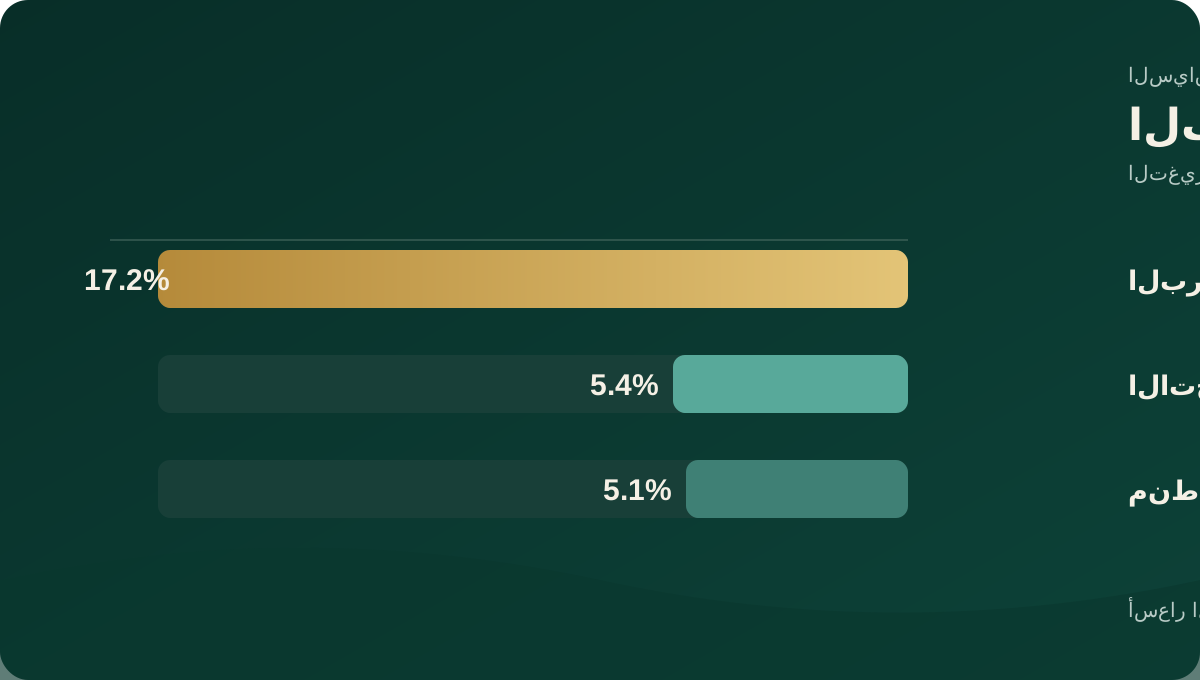
Portugal’s appeal is no secret. In the second quarter of 2025, residential prices rose 17.2% year on year—the largest increase recorded in the European Union that quarter, compared with 5.4% across the EU.1 Land is not interchangeable with housing, and national averages cannot price an individual property. The figure matters for another reason: it describes a market in which enthusiasm can move faster than investigation.
Foreign participation is also substantial. Banco de Portugal reports that, within the broad 2025 lending category covering second homes, rental property and land for residential construction, foreign borrowers represented roughly one quarter of borrowers but 42% of the amount financed.2 International demand is therefore part of the market, not a curiosity at its edge.
Figure 1 — Portugal’s 2025 price momentum
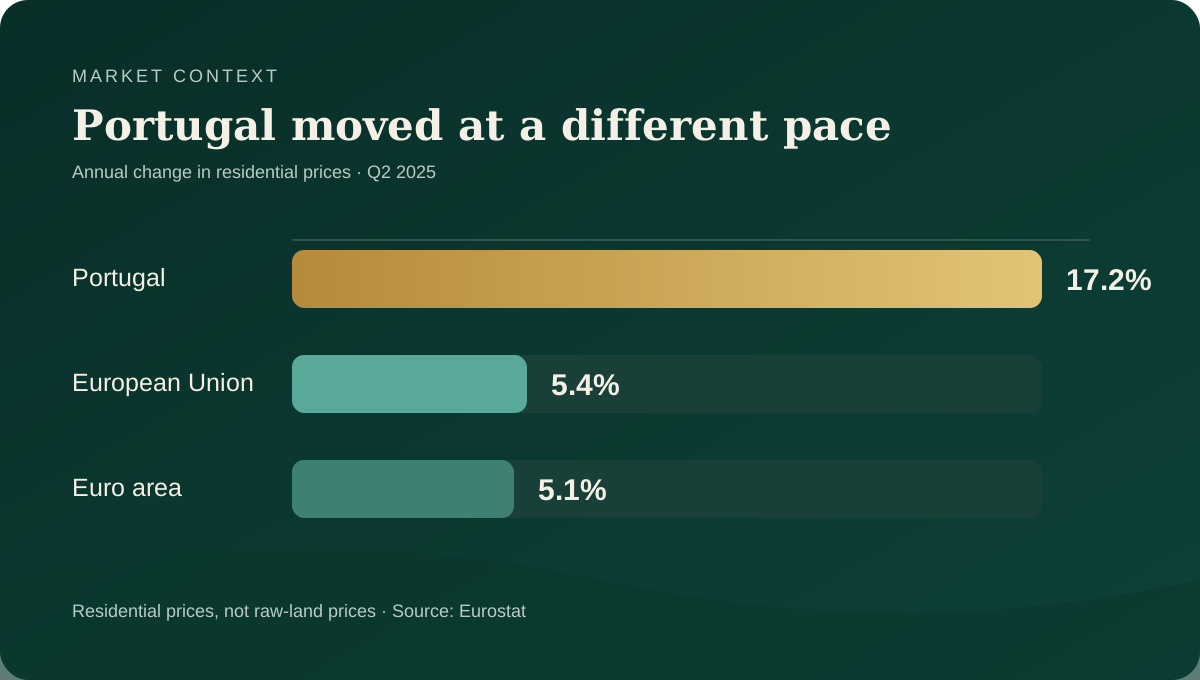
Residential prices, not raw-land prices. Source: Eurostat, Q2 2025.
Fast-rising prices do not remove opportunity. They raise the cost of imprecision. When several buyers are attracted to the same setting, the investor who understands what the land can support is in a stronger position than the one who merely reacts first.
The first question: what, exactly, is being sold?
The entrance gate, stone wall or line of trees may feel like an obvious boundary. Legally, it proves very little. A Portuguese rural or mixed property can appear across several records, each serving a different purpose:
- the Land Registry certificate, which identifies registered ownership, rights, charges and encumbrances;
- the tax record, or caderneta predial, which contains the fiscal description and taxable value;
- the cadastral or georeferenced representation, which helps establish the property’s physical location and perimeter.
These descriptions should correspond, but correspondence should be verified rather than assumed. BUPi, Portugal’s one-stop property platform, is designed to bring together information relating to registration, the tax record and georeferencing; its official guidance also stresses that registration is what removes doubt about legal ownership.3
This is particularly relevant in rural areas, where boundaries may have been understood locally for generations without having been recorded with modern geographic precision. Portugal has been addressing that history through BUPi, the national platform that brings together registration, tax and georeferencing information. Its public GeoPortal became available in January 2026, providing mapped property polygons, cadastral information and administrative boundaries.4
The technology is useful, but a polygon on a screen is not a substitute for verification. The indicated area should be compared with the title, tax record, topographic survey and reality on the ground. The investigation must also identify mortgages, usufructs, rights of way, co-ownership and other rights that may affect the transaction.
Clear ownership answers who may sell. It does not answer what the buyer may do.
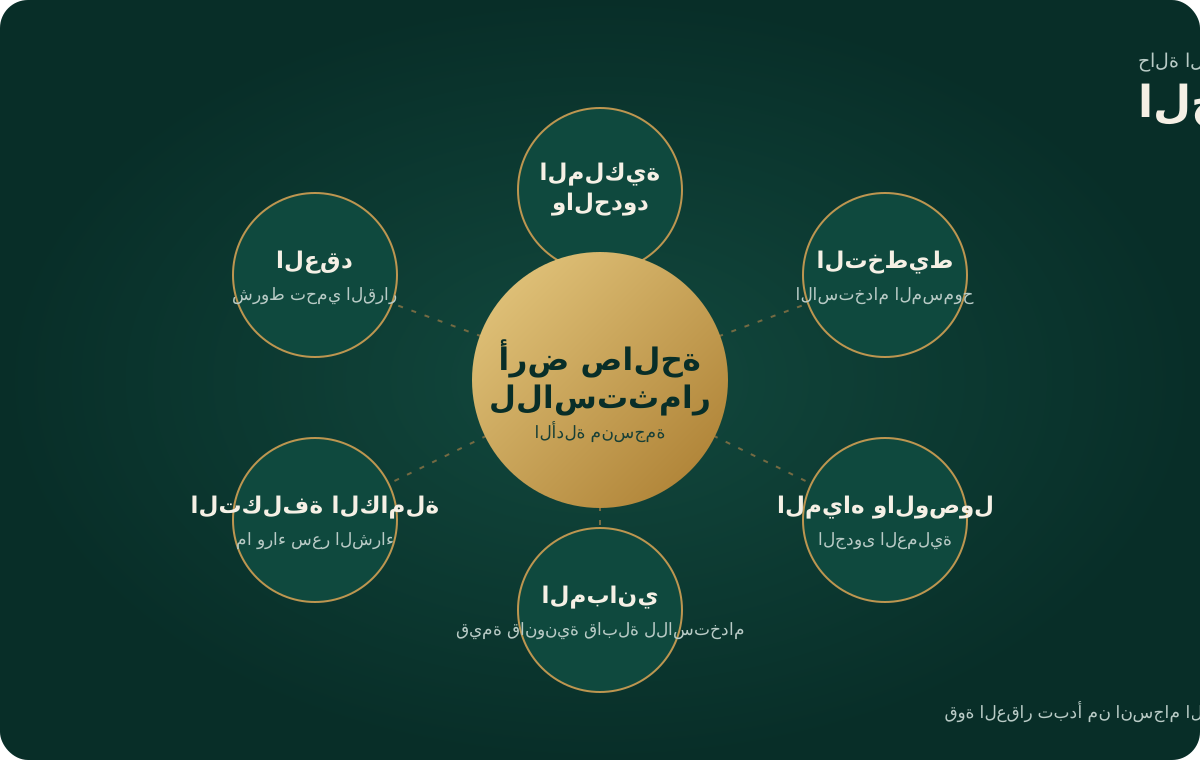
Figure 2 — The six layers of investable land
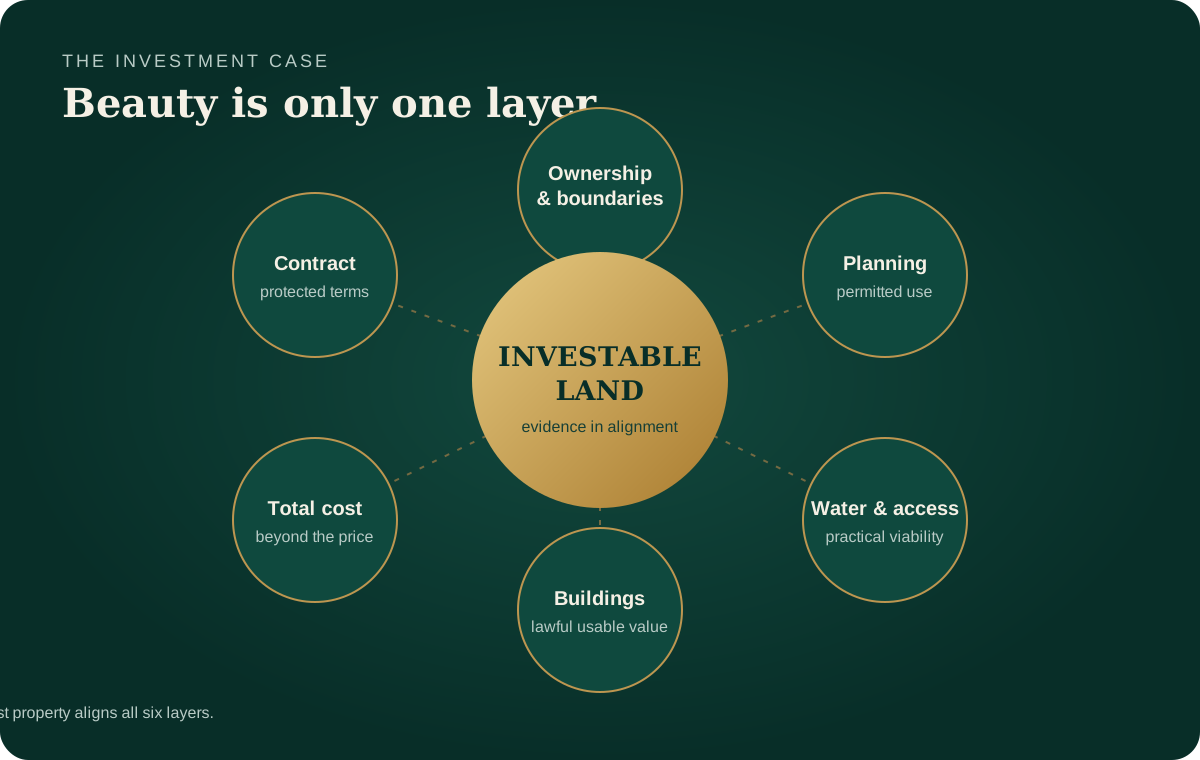
A strong investment case is created by alignment across all six layers—not by one attractive feature.
Ownership does not create a right to build
Few words in a property advertisement carry more ambiguity than “potential.” Potential for agriculture? Rehabilitation? A family residence? Rural tourism? Subdivision? Each possibility belongs to a different legal and technical conversation.
The applicable Municipal Master Plan—the Plano Diretor Municipal, or PDM—classifies the land and establishes the local framework for use and development. That framework must then be read alongside easements and public-interest restrictions. Two important examples are the National Agricultural Reserve (RAN), which protects land with agricultural capability, and the National Ecological Reserve (REN), which protects environmentally sensitive areas and areas exposed to natural risks.
RAN land is intended for agricultural use, and its official cartography forms part of the constraints attached to municipal planning. Non-agricultural actions are restricted.5 A property can also contain several classifications at once: an urban component, a rural component, a protected strip, an existing building and land with different restrictions. A single asking price can therefore conceal several very different categories of value.
Portugal’s 2025 changes to territorial-management rules created a narrow municipal route for reclassifying certain land beside existing urban areas. The mechanism is tied to infrastructure and to a requirement that at least 70% of above-ground construction be used for public, affordable-rental or controlled-cost housing. Specified REN and RAN areas retain those designations.6 This is not an automatic right to build, and headlines about planning reform should never be treated as permission for a particular parcel.
When a project depends on a specific use, the strongest answer comes from the relevant municipality. A formal request for prior information—commonly called a PIP—can test the viability and planning conditions of a proposed operation before the investor commits to the land. The Portuguese government’s 2026 guidance for tourism projects on rural land expressly directs promoters to seek municipal information on viability and planning constraints before applying for permission.7
The question must be precise. “Can I build here?” is too vague. A useful enquiry defines the intended use, approximate area, existing structures, access and operating model. The answer is only as valuable as the proposal it addresses.
Water, access and power belong in the valuation
A property can be legally sound and still be commercially weak. Three practical systems frequently decide whether a rural idea is viable: water, access and power.
Water
A well, borehole, stream or irrigation channel should be investigated as a regulated resource, not admired as a landscape feature. The investor needs to know whether the source is lawful, registered where required, productive through the relevant seasons, suitable for its intended use and capable of supporting the proposed demand.
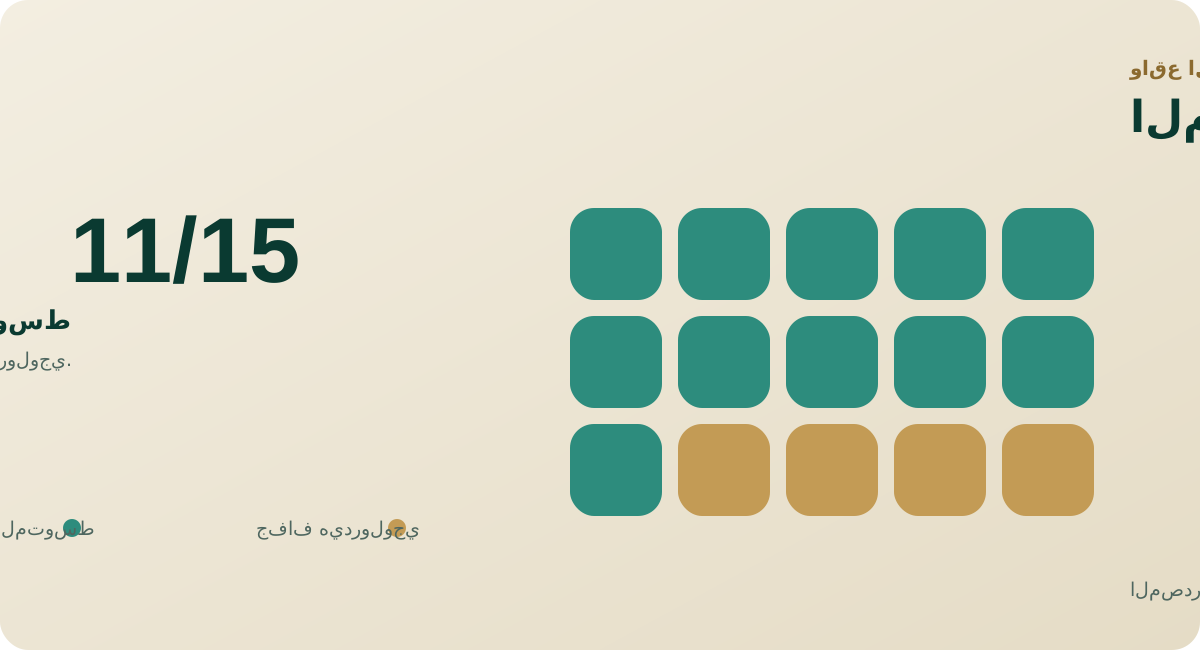
National conditions also conceal strong regional differences. Portugal’s Environment Agency reported that the 2024/2025 hydrological year ended with surface-water reserves above average in 11 of 15 monitored river basins. Four basins—the Ave, Mondego, Mira and western Algarve river basins—remained in hydrological drought.8 At the same time, roughly two thirds of mainland Portugal sits over low-availability groundwater formations whose performance can vary greatly with rainfall.8
Figure 3 — One country, different water realities
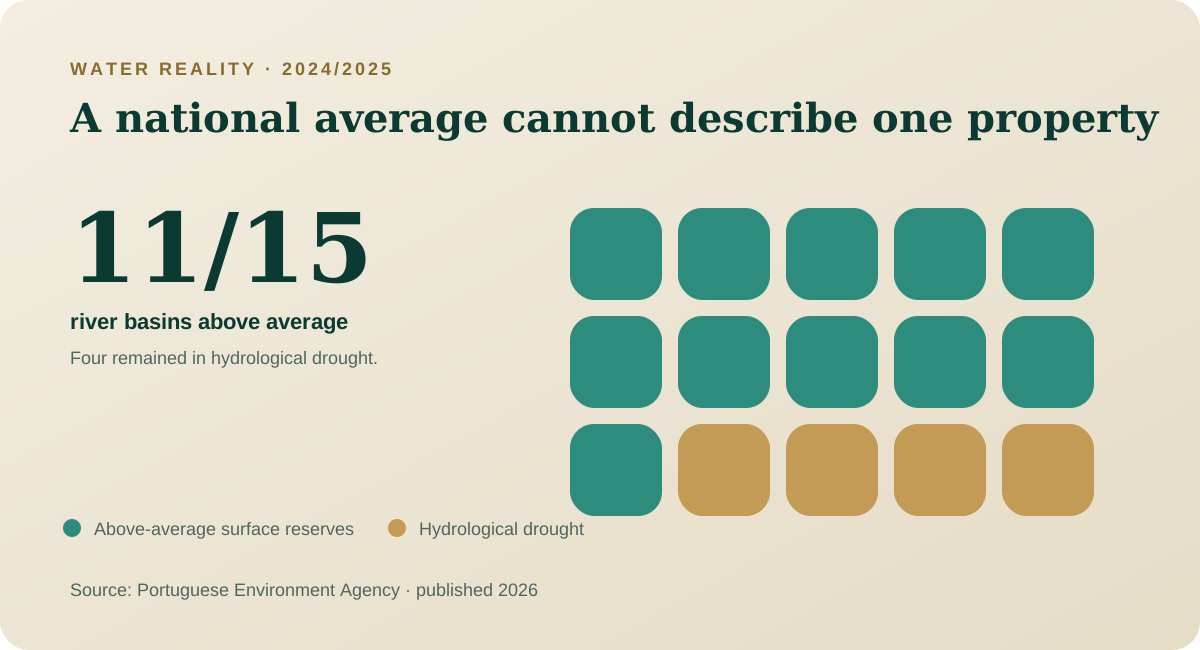
National variation does not determine conditions on a specific property. Source: Portuguese Environment Agency, 2026.
A green landscape in spring is not proof of secure water in August. Water capacity should be tested against the operating plan, not the appearance of the land on viewing day.
Access
A visible road is not necessarily a legally protected route. The route may cross another property, depend on an informal arrangement, narrow beyond practical use or be unsuitable for construction vehicles and emergency access. The investigation should establish the legal right of access, its registered width and route, maintenance responsibilities and whether it serves the project envisaged.
Power and communications
Electricity poles nearby do not confirm capacity or an affordable connection. The same applies to water mains, drainage and fibre. Written confirmation, connection estimates and realistic lead times turn assumptions into costs.
These systems should appear in the financial model before acquisition. If they are treated as matters for later, the buyer may discover that the apparently inexpensive land carries the most expensive infrastructure.
Existing buildings should be read as evidence
Ruins and traditional houses bring emotional and architectural value. They also invite dangerous assumptions. The fact that walls exist does not, by itself, confirm their registered area, lawful use, date, licensing history or right to reconstruction.
For each structure, the physical footprint should be compared with the registry and tax descriptions. Available municipal archives should be examined for licences, approved plans, exemptions and recorded use. For buildings within the applicable rules, the transaction file may also require an energy certificate and technical or use documentation.9
This work does more than identify problems. It can reveal value. A correctly documented building may provide a clearer route to rehabilitation than an unverified ruin. Conversely, a charming structure marketed as the centrepiece of a project may contribute little if its history and legal status cannot support the intended use.
Good investigation protects the architecture from fantasy. It allows the design to begin with what the property can credibly become.
The advertised price is the first number, not the total
An acquisition model should separate four layers of cost:
- the purchase itself, including the agreed price, IMT and Stamp Duty;
- the cost of certainty, including legal, technical, surveying and planning work;
- the cost of usability, including access, utilities, water systems, rehabilitation and approvals;
- the cost of ownership, including annual tax, maintenance, land management, insurance and security.
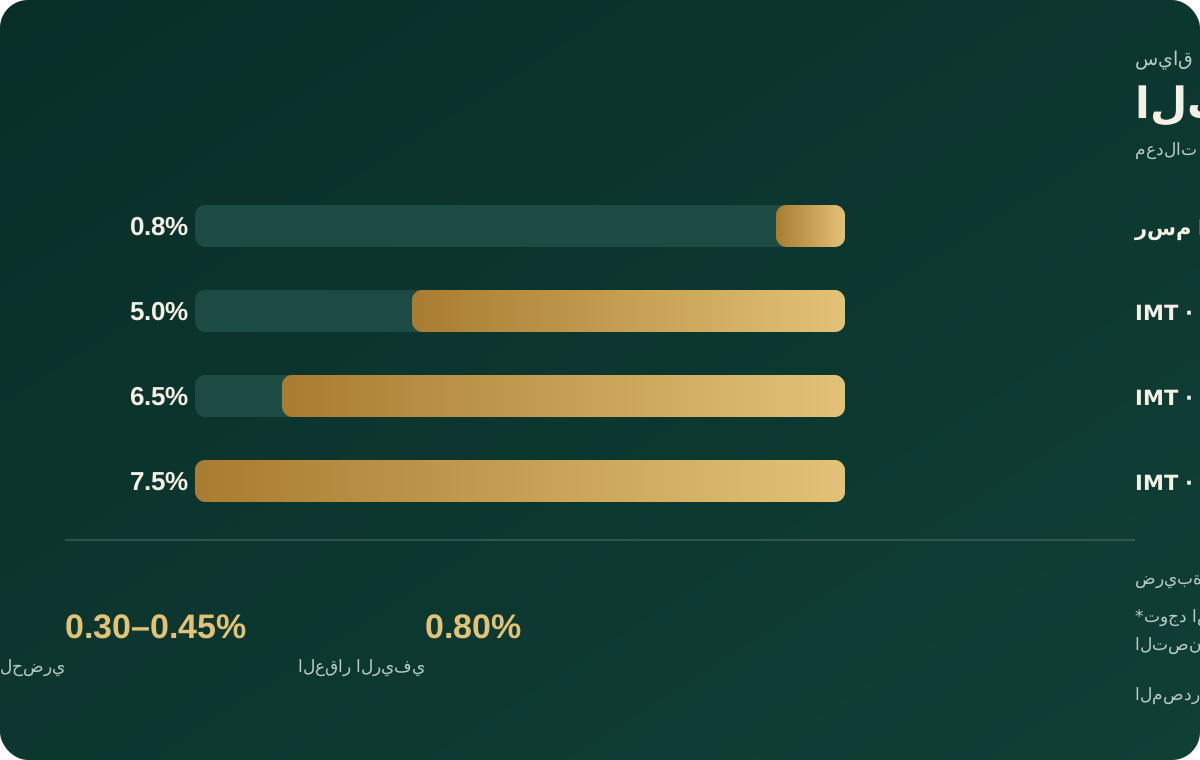
Current Portuguese tax treatment depends on the property’s legal classification, intended use, purchaser and transaction structure. As a reference point, the standard IMT rate is 5% for rural property and 6.5% for other urban property or other chargeable acquisitions.10 Stamp Duty on a property purchase is generally 0.8%, calculated on the higher of the acquisition value and taxable value.9
A significant 2026 change also deserves attention: acquisitions by non-residents of urban property intended exclusively for housing are generally subject to a 7.5% IMT rate, with defined exceptions, including certain cases involving a move to Portuguese tax residence or qualifying affordable rental use.11 This rule should be examined against the buyer’s circumstances and the property’s classification before costs are fixed.
Figure 4 — Selected Portuguese property-tax reference rates
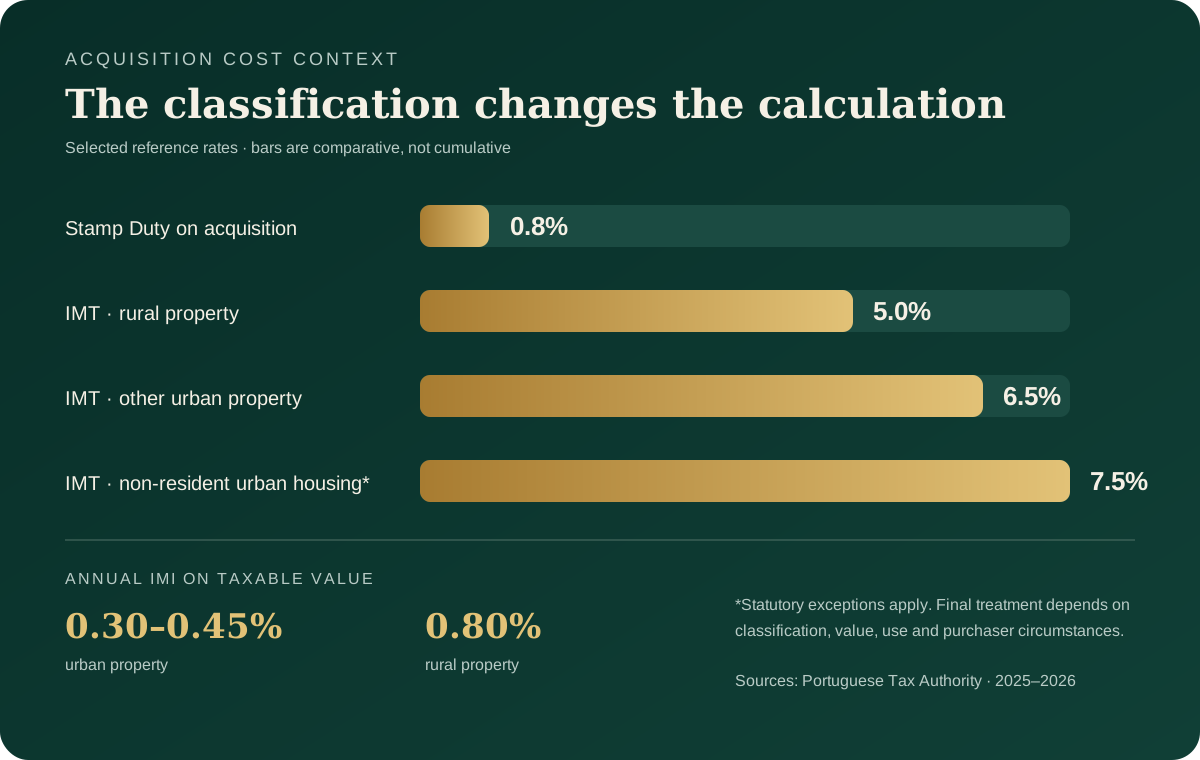
The 7.5% rule includes statutory exceptions. IMT and Stamp Duty depend on classification, value, use and purchaser circumstances. Annual IMI is charged on the taxable value and applicable rate.12
The most expensive mistake is often not a tax miscalculation. It is paying for a future use that the property cannot support. A lower-priced plot requiring uncertain planning, extensive infrastructure and boundary correction may be more expensive than a higher-priced property with a coherent title and credible route to use.
The promise contract is a threshold, not paperwork
In Portugal, the promissory sale and purchase agreement—the Contrato-Promessa de Compra e Venda, commonly called the CPCV—is often the moment when commercial enthusiasm becomes legal and financial exposure. A deposit is typically paid, deadlines are established and consequences for default are agreed.
That is why the investigation should shape the contract, rather than follow it.
Depending on the property and project, protections may address due diligence, planning feasibility, finance, correction of records, discharge of encumbrances and completion documents. The exact drafting belongs with qualified Portuguese legal counsel.
Before that threshold, an investor should be able to answer six questions in plain language:
- Who owns every part of the property, and who has rights over it?
- Do the registry, tax record, mapped boundary and measured reality agree?
- What uses are currently permitted, and what remains conditional?
- Are every building, access route and water source adequately documented?
- What capital is required before the property becomes usable?
- If the intended project changes, what value and exit market remain?
If the answers depend mainly on what someone believes the municipality “usually allows,” the investigation is incomplete.
A more disciplined route from attraction to acquisition
The process does not need to extinguish the emotion that attracted the buyer. It needs to place that emotion in the correct order:
- Define the outcome. Set the intended use, scale, location, capital range and time horizon before searching.
- Eliminate obvious conflicts. Review ownership, tax, cadastral and planning information before investing heavily in design.
- Test the physical property. Walk the boundaries and examine access, buildings, water, power, terrain and construction logistics.
- Test the intended use. Obtain qualified planning advice and meaningful municipal information where the project depends on a particular outcome.
- Price the whole decision. Include taxes, professional work, corrections, infrastructure, development, operating costs and contingency.
- Contract around verified reality. Finalise commercial terms only when the remaining uncertainties are understood and reflected in the price.
Where real opportunity is found
Portugal still offers land with character, productive value and room for thoughtful projects. The best opportunities are not always those with the loudest claims or the most polished photographs. They are often properties where several quiet advantages meet:
- the ownership and boundaries can be understood;
- the intended use fits the planning reality;
- access and infrastructure are credible;
- water requirements match local availability;
- existing buildings contribute lawful, usable value;
- the total capital requirement remains proportionate;
- and the property retains purpose even if the original plan evolves.
This is the difference between buying possibility and buying a promise.
The foreign investor does not need to know every Portuguese procedure personally. They do need an independent process that separates evidence from sales language and identifies the right questions before commitments become expensive.
Land carries history, regulation and physical limits—but also remarkable potential. When those dimensions are understood together, due diligence becomes more than protection. It becomes a way of recognising value that a viewing alone cannot reveal.
The view may open the door. Clarity is what makes the property worth entering.